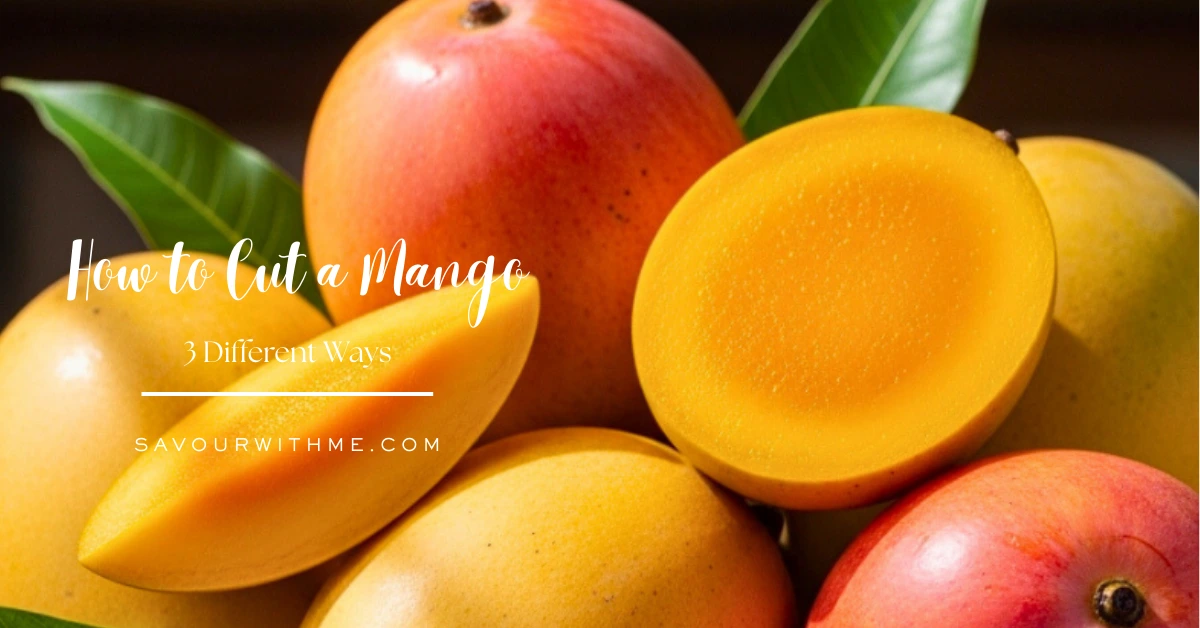
Cutting a mango isn’t always straightforward because of the flat pit in the center, but with the right techniques, you can get clean pieces without much waste.
Mangos add great flavor to smoothies, salsas, and more. I’ll share three methods, each useful for different needs like snacking or cooking. These steps will help you handle mangos easily.
Method 1: The Classic Cheek Cut (Hedgehog Style)
This is my go-to method when I want neat, bite-sized pieces without much fuss. It’s great for snacking or topping yogurt, and it minimizes waste since you can scrape every last bit off the pit.
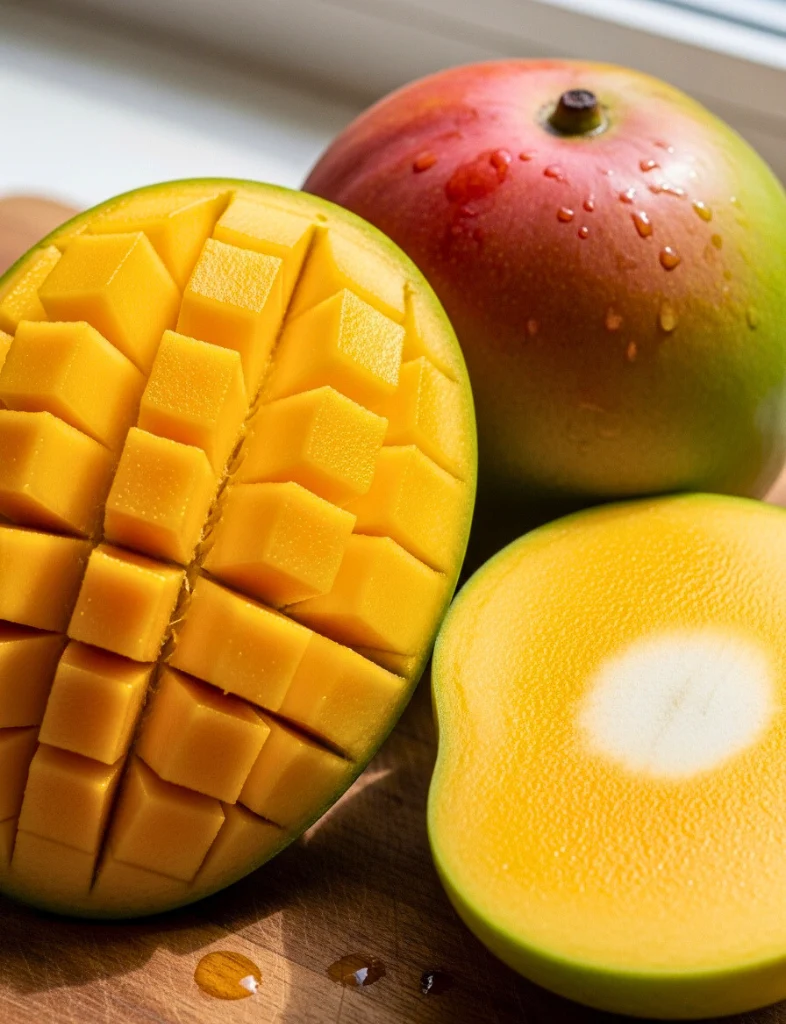
- Start by washing your mango under cool water and patting it dry. Place it upright on a cutting board with the stem end down; this helps you visualize the flat pit inside, which runs vertically like a wide oval.
- Hold the mango steady and slice off one “cheek” by cutting parallel to the pit, about half an inch from the center. Repeat on the other side so you have two fleshy halves and a middle section with the pit.
- Take one cheek, flesh side up, and score it with a sharp knife in a crisscross pattern. Make lines about half an inch apart horizontally and vertically, but don’t cut through the skin. Be gentle to avoid piercing the peel.
- Now, push the skin inward from the back to invert the cheek, popping out the cubes like a hedgehog’s spikes. Use your knife or a spoon to gently cut or scoop the pieces off the skin. Do the same for the other cheek.
- For the middle pit section, stand it on its edge and carefully slice off the remaining flesh around the pit. You can then dice or slice these strips as needed.
Method 2: Peel and Slice Around the Pit
If you’re incorporating mango into a cooked dish, like a curry or chutney, this method is efficient because it lets you get larger slices or chunks quickly. It’s a bit more hands-on, but once you get the hang of it, it’s speedy.
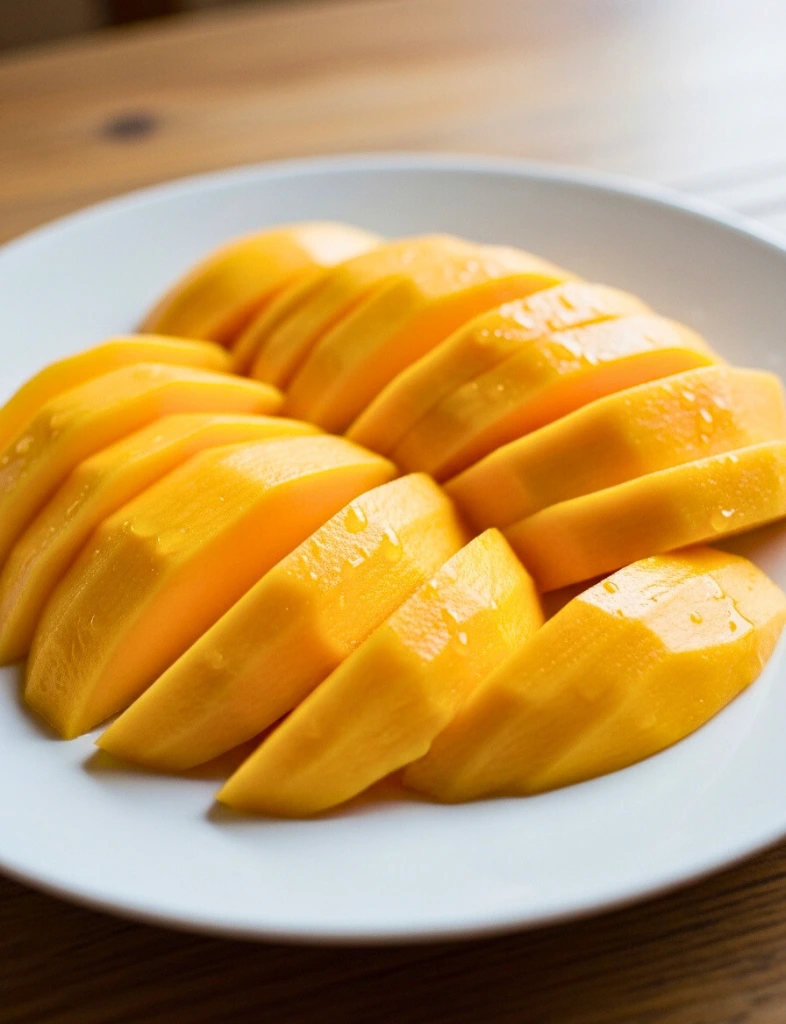
- Use a vegetable peeler or a paring knife to remove the skin entirely. Start at the top and work your way down in long strokes, rotating the fruit as you go. If the mango is firm, this is easier; for riper ones, peel gently to avoid squishing the flesh.
- Hold the peeled mango in one hand (use a towel if it’s slippery) and locate the pit by feeling for the flat, oblong center. With a sharp knife in your other hand, slice downward along one side of the pit, curving slightly to follow its shape. Rotate and repeat on the other side to remove the two main lobes.
- For any flesh still clinging to the pit, carefully carve it off in thin strips, staying close to the pit but avoiding the fibrous core.
- Now, take the lobes and slice them into your desired shape: thin strips for salads, thicker wedges for grilling, or dice them by cutting crosswise first, then lengthwise.
- If you need uniform cubes, stack the slices and cut them into a grid pattern on the board.
This approach is ideal for recipes where texture matters, and it gives you full control over the size. Just watch your fingers around that pit. I’ve nicked myself once or twice when rushing!
Method 3: The Spoon Scoop (No Knife on Flesh)
For those times when you want to keep things simple and mess-free, especially if you’re feeding kids or just want pulp for smoothies, this method uses minimal knife work on the fruit itself.

- Wash and dry the mango, then stand it upright on the cutting board. Slice off the two cheeks as in Method 1, cutting parallel to the pit about half an inch from the center.
- Instead of scoring, grab a large spoon (a tablespoon works best). Insert the edge of the spoon between the flesh and the skin of one cheek, starting at the wider end.
- Gently scoop along the curve of the skin, separating the flesh in one smooth piece. If it’s ripe, it should come out easily; for firmer mangos, wiggle the spoon a bit.
- Repeat with the other cheek. For the pit section, use the spoon to scoop off the remaining flesh, or nibble it directly if you’re snacking!
- Once you have the flesh pieces, you can chop them on the board into cubes, slices, or mash them right away for purees.
Super low-effort and great for reducing waste, plus no risk of cutting into your hand while scoring. If the mango is overripe, this method shines because the flesh practically falls out.
How to Cut a Mango FAQs
Is it better to peel a mango before cutting?
It really depends on the method and your end goal.
In Method 2, peeling first makes slicing around the pit straightforward, especially for larger pieces in recipes. But for Methods 1 and 3, leaving the peel on acts like a handle, making it easier to score or scoop without the fruit slipping away.
Personally, I peel first only if the skin feels tough or if I’m dealing with a variety that’s more fibrous.
Otherwise, peeling after cutting keeps things cleaner and lets you eat right off the skin if you want. Experiment with a couple of mangos to see what feels natural for you. There’s no one “best” way, just what works in your kitchen.
How to get the pit out of a mango?
Aim your knife parallel to the pit’s flat side. Once the cheeks are free, the pit is exposed in the middle strip.
To extract any extra flesh, hold the pit section steady and use your knife to carve around it, or twist it gently if it’s loose.
If you’re in a hurry, I’ve found that banging the pit edge on the counter (gently!) can sometimes loosen it, but that’s more for fun than precision.
What are some common mistakes when cutting a mango?
Cutting too close or too far can leave you with uneven pieces or hitting the pit hard, which dulls your knife.
Another is using a dull blade. Sharpen up for clean cuts.
Overripe mangos can turn to mush if you’re too aggressive, so handle them delicately.
And don’t forget to stabilize your cutting board; a wobbly surface leads to accidents.
I once sliced into my thumb because I skipped drying the mango. Slippery hands are no joke. Start slow, and you’ll avoid these pitfalls.
Is there a trick to cutting a slippery mango?
Absolutely, and it’s all about grip and tools.
If your mango is ripe and juicy, pat it dry with a paper towel before starting.
For extra hold, wrap a damp cloth around the base or use those rubber jar openers under it on the board.
If peeling first, score the skin lightly before removing it to create grips.
Conclusion
There you have it: three reliable ways to cut a mango that can fit any occasion, from fancy presentations to quick blends.
Whether you go for the hedgehog charm of Method 1, the straightforward slices of Method 2, or the easy scoop of Method 3, the key is practice and picking ripe fruit to start.
Mangos are versatile little powerhouses in the kitchen, adding that sweet-tangy punch to meals and snacks. Next time you’re at the market, grab a few extras and try these out.
How to Cut a Mango (3 Easy Methods)
Ingredients
Equipment
Method
- Wash the mango thoroughly under cool water and pat completely dry with a paper towel to prevent slipping.
- Stand the mango stem-end down on the cutting board. Slice off one cheek by cutting parallel to the flat pit, about ½ inch (1 cm) from the center. Repeat on the opposite side to get two large cheeks and a middle pit section.
- Place one cheek flesh-side up. Score the flesh in a crisscross grid pattern (about ½-inch squares) without cutting through the skin.
- Gently push the skin from the back to invert the cheek, popping the cubes outward like a hedgehog. Scoop or cut the cubes free from the skin. Repeat with the second cheek.
- For the pit section, stand it on edge and carefully slice off any remaining flesh. Dice as desired.
- Peel the mango entirely using a vegetable peeler or sharp paring knife, working from top to bottom.
- Hold the peeled mango and feel for the flat pit. Slice downward along one side of the pit, curving slightly to follow its shape and remove one large lobe. Repeat on the other side.
- Carefully carve off any flesh still attached to the pit.
- Cut the lobes into desired shapes: dice by making crosswise and lengthwise cuts, slice into strips, or wedge for grilling.
- Slice off the two cheeks as in Method 1.
- Insert a large spoon between the flesh and skin of one cheek. Scoop along the curve to remove the flesh in one piece (or large scoops if very ripe). Repeat with the other cheek.
- Scoop or trim any remaining flesh from the pit section.
- Chop the scooped mango on the board into cubes, slices, or mash for purees if needed.
Notes
- Always use a sharp knife—dull blades increase slipping risk.
- For slippery ripe mangos, dry thoroughly and use a damp towel under the board for stability.
- Peel after cutting for Methods 1 and 3 (skin acts as a handle); peel before for Method 2.
- Minimize waste by carving close to the pit—the flesh around it is often the sweetest!
- Overripe mangos work best with Method 3; firmer ones suit Methods 1 or 2.
- Store cut mango in an airtight container in the fridge for up to 3–5 days, or freeze cubes for smoothies.
- Practice once or twice—the pit’s flat shape becomes easy to feel after a few tries.
About The Author