Making pancakes from scratch sounds fancy, but it’s actually one of the simplest and most satisfying things you can cook at home.
With just a few pantry staples, you can create soft, fluffy pancakes that taste far better than any boxed mix. There’s something comforting about whisking a batter yourself and watching it turn into golden circles on a warm pan.
It feels homemade in the best way, easy and customizable.
Whether it’s your first time making pancakes or you’ve made them a hundred times, a few small tweaks can completely change the outcome.

Key Ingredients
Pancakes rely on simple ingredients, but each one plays an important role.
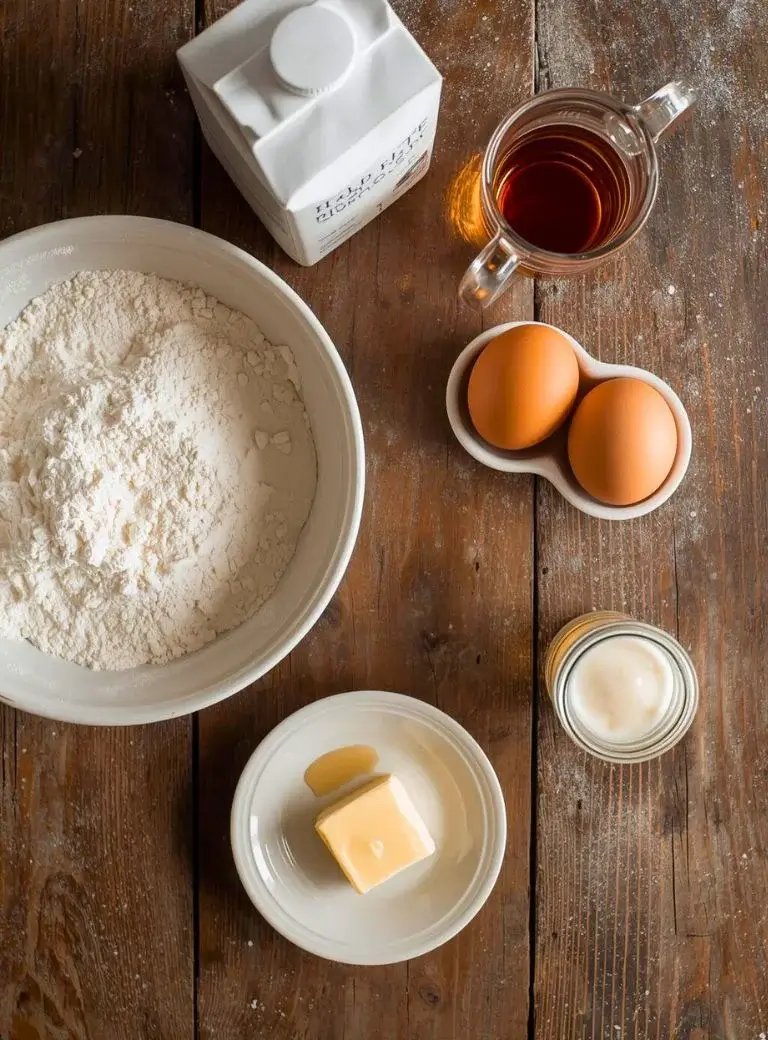
- 1 cup (125 g) all-purpose flour: All-purpose flour works best for classic pancakes because it balances softness and stability.
- 2 teaspoons baking powder: Fresh baking powder is essential—if it’s old, your pancakes will turn out flat.
- 2 tablespoons sugar: You don’t need much.
- ¼ teaspoon salt: to enhance flavor and balances the sweetness.
- 1 cup (240 ml) milk: Whole milk gives richer results, but low-fat milk works too.
- 1 large egg: to bind everything together and add tenderness.
- 2 tablespoons melted butter or neutral oil: adds richness and prevents dryness.
- ½ teaspoon vanilla extract (optional)
I’ve noticed that when ingredients are measured carefully and kept simple, pancakes almost always turn out better than when things are overcomplicated.
Nutritional Facts (Per 2 Medium Pancakes)
| Calories | 220 kcal |
| Carbohydrates | 28 g |
| Protein | 6 g |
| Fat | 9 g |
| Sugar | 5 g |
| Fiber | 1 g |
| Sodium | 380 mg |
How To Make Perfect Pancakes:
- Mix the dry ingredients
In a large bowl, whisk together flour, baking powder, sugar, and salt. This helps distribute the leavening evenly. - Mix the wet ingredients
In a separate bowl, whisk milk, eggs, and melted butter (or oil) until combined. - Combine gently
Pour the wet ingredients into the dry ingredients. Stir gently until just combined. The batter should look slightly lumpy—this is a good thing. - Rest the batter
Let the batter rest for 5–10 minutes. This allows the flour to hydrate and results in fluffier pancakes. I used to skip this step, but once I started resting the batter, the texture improved noticeably. - Cook on medium heat
Heat a non-stick pan or griddle over medium heat and lightly grease it. Pour about ¼ cup of batter for each pancake. - Flip at the right time
When bubbles form on the surface and the edges look set, flip gently. Cook until golden on both sides.
Should You Use Butter or Oil in Pancakes?
I think both butter and oil work, but they give slightly different results.
Butter adds flavor and richness. Pancakes made with butter taste more indulgent and classic. The downside is that butter can brown quickly if the pan is too hot.
Oil produces slightly lighter and more evenly cooked pancakes. It’s also easier to work with if you’re cooking a large batch.
A personal favorite approach is using melted butter in the batter and lightly oiling the pan. This gives the best of both worlds—flavor and even cooking.
How Many Eggs Is Just Right?
For a standard pancake recipe using about 1 cup of flour, one egg is perfect. It provides structure without making the pancakes dense.
Using too many eggs can make pancakes taste eggy and feel more like omelets than pancakes. Using too few can make them crumbly. I once doubled the eggs thinking it would make pancakes richer, and they turned out surprisingly tough—lesson learned.

5 Tips for Perfect Pancakes:
1. Don’t overmix the batter: Overmixing develops gluten, which leads to tough pancakes. Stir just until the flour disappears.
2. Control the heat: Medium heat works best. High heat burns the outside before the inside cooks.
3. Use a measuring cup for pouring: This keeps pancakes uniform and helps them cook evenly.
4. Grease lightly: Too much grease causes uneven browning. A thin layer is enough.
5. Keep cooked pancakes warm: Place cooked pancakes on a plate in a low oven (about 200°F / 95°C) while finishing the batch.
What Are Common Pancake Mistakes?
One common mistake is rushing the process. Pancakes benefit from patience, especially when waiting for bubbles before flipping.
Another mistake is using cold ingredients straight from the fridge. Room-temperature milk and eggs mix more smoothly into the batter.
Using expired baking powder is another issue that often goes unnoticed. Pancakes that don’t rise usually point to this problem.
Finally, flipping too early or too often prevents proper browning and structure. One confident flip is all you need.
What to Serve with Pancakes?
Pancakes are a blank canvas, which makes them so appealing.
Classic toppings include maple syrup, butter, and honey. For freshness, add berries, sliced bananas, or apple compote.
For protein, serve pancakes with scrambled eggs, Greek yogurt, or nut butter. When I want something a little extra filling, I like adding a side of yogurt and fruit—it balances the sweetness nicely.
Savory pairings like crispy bacon or sausages also work well, especially for brunch-style meals.

How to Store (and Reheat) Pancakes Without Ruining Them?
Let pancakes cool completely, then stack them with parchment paper between each one. Store in an airtight container in the refrigerator for up to 3 days.
Freeze pancakes in a single layer first, then transfer to a freezer-safe bag. But I will not recommend you to freeze them, as they can loose that taste if you reheat them after freezing, instead, refrigerate the pancake batter in the fridge in an airtight container.
To reheat:
- Toaster: Best for single pancakes—quick and slightly crisp.
- Pan: Reheat on low heat for the freshest texture.
- Microwave: Works in a pinch, but cover with a damp paper towel to prevent dryness.
Avoid reheating pancakes multiple times, as they dry out quickly.
Conclusion:
Making pancakes from scratch is one of those kitchen skills that pays off every time.
With simple ingredients, a little attention to technique, and a relaxed approach, pancakes become less of a recipe and more of a reliable go-to meal.
Once you master the basics, it’s easy to adapt them to your taste and make them your own.
About The Author