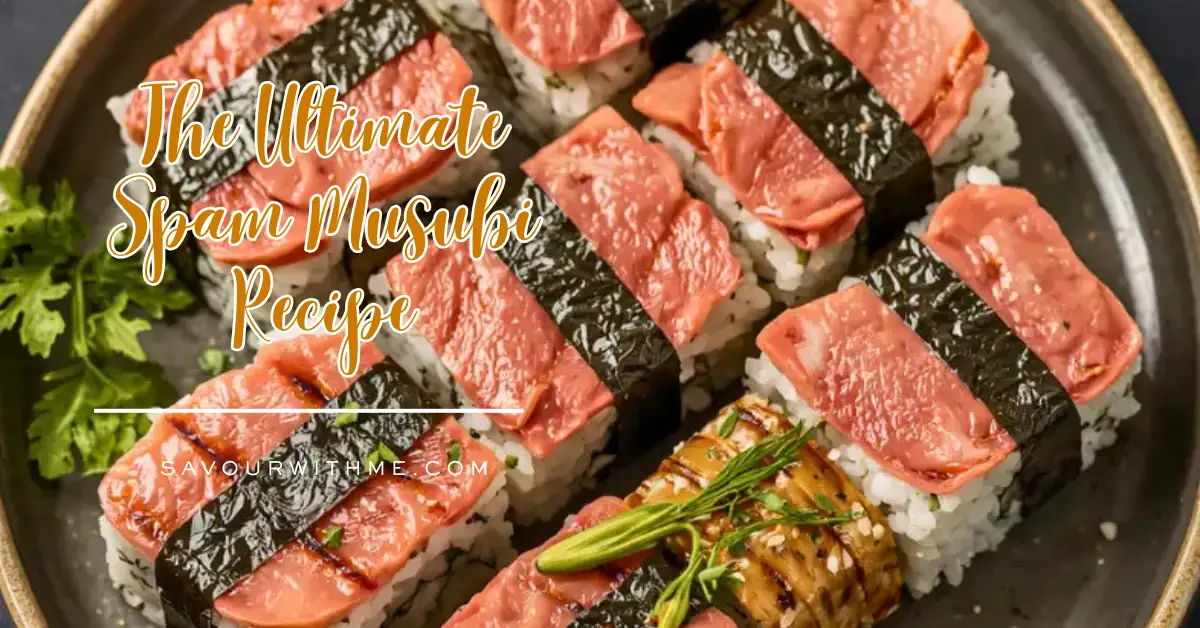
There is something magical about food that is both a convenience store snack and a homemade comfort food.
Spam Musubi, the beloved Hawaiian treat, fits this description perfectly.
It is a beautiful example of how simple ingredients can come together to create something far greater than the sum of their parts.
Forget what you think you know about canned meat.
When pan-fried to crispy perfection and glazed with a sweet and savory sauce, Spam becomes a caramelized delicacy.
Paired with sticky sushi rice, wrapped in a strip of briny nori (seaweed), this handheld snack is pure perfection.
This recipe will have you rolling like a pro in no time.
What Makes This Musubi Recipe the Best?
The secret to the best Musubi lies in the sweet and sticky glaze.
Many people just fry the Spam and put it on rice. That is fine, but it is not great.
To get that authentic, addictive flavor, you need to create a reduction.
By combining soy sauce, brown sugar, and mirin, you create a syrup that clings to the Spam, giving it a glossy, caramelized crust that balances salty and sweet perfectly .

Texture is everything.
You want a contrast between the soft, sticky rice, the crispy edges of the fried Spam, and the dry, crackly snap of the nori.
This recipe focuses on achieving that crispy sear on the meat before adding the sauce, ensuring the Spam isn’t just wet, but actually has a bite to it.
Mastering the mold makes it look professional.
You do not need fancy equipment.
While you can buy a specific Musubi mold for a few dollars, the empty Spam can itself is the perfect shaping tool.
Ingredients
This recipe is short and sweet because the flavors are big but the list is small.
For the Glazed Spam
- 1 can (12 oz) Spam (Original flavor works best)
- 1/4 cup Soy Sauce (Use low-sodium if you prefer less salt)
- 1/4 cup Brown Sugar (Light or dark works; dark gives a deeper molasses flavor)
- 2 tablespoons Mirin (This is a sweet Japanese cooking wine, essential for the glaze)
For the Rice & Assembly
- 2 cups Sushi Rice (Short-grain Japanese rice)
- 2 1/2 cups Water (for cooking the rice)
- 3 sheets Nori (Seaweed) (Cut into 1-inch wide strips)
- 2 tablespoons Furikake (Japanese rice seasoning with sesame seeds and seaweed)
Recipe Details
| Detail | Information |
|---|---|
| Prep Time | 10 minutes |
| Cook Time | 15 minutes |
| Total Time | 25 minutes |
| Servings | 6 Musubi |
| Calories | Approx. 320 per musubi |
Instructions
Let’s get cooking. Do not worry if this is your first time; the process is very forgiving.
1. Cook the Sushi Rice
Rinse the 2 cups of sushi rice in a fine mesh strainer under cold water until the water runs clear.
This removes excess starch and prevents the rice from becoming gluey.
Cook the rice according to your rice cooker instructions, or use the absorption method on the stovetop (add 2 ½ cups water, bring to a boil, cover, and simmer on low for 20 minutes).
Let it rest for 10 minutes before fluffing. The rice must be sticky to hold its shape.
2. Prepare and Fry the Spam
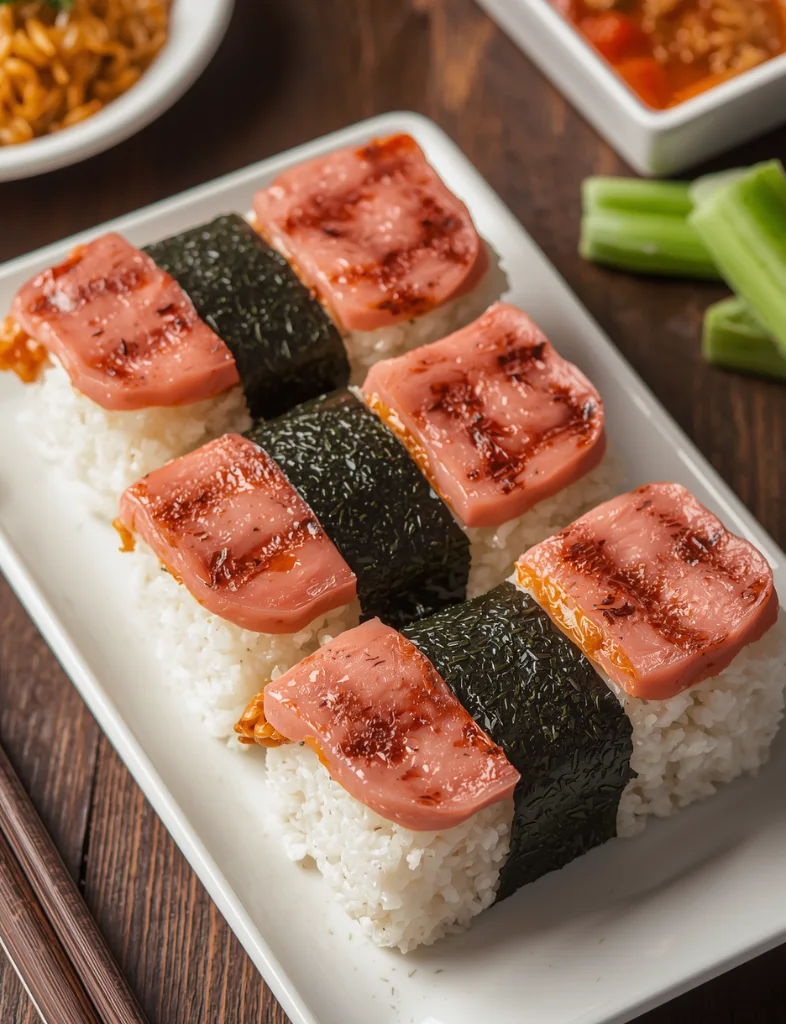
Remove the Spam from the can and slice it into 6 even slices, about ½ inch thick .
Do not cut them too thin; they need to be substantial.
Heat a non-stick skillet over medium-high heat.
Place the Spam slices in the dry pan.
They will release their own fat immediately.
Fry for 2 to 3 minutes per side until they are deeply golden brown and crispy on the edges.
3. Make the Glaze
While the Spam is frying, whisk together the soy sauce, brown sugar, and mirin in a small bowl.
Once the Spam is crispy, pour the sauce mixture into the pan over the meat.
Let it bubble up. Stir and flip the Spam to coat it completely.
Cook for another minute until the sauce reduces and becomes thick and sticky. Turn off the heat.
4. Shape the Rice
If you have a Musubi mold, place it on a cutting board. If not, wash and dry the empty Spam can and cut out both ends to create a tube.
Wet your hands with water to prevent sticking.
Scoop a handful of cooked rice (about 1/2 cup) into the mold or can and press down firmly.
You want the rice to be compressed but not mashed.
5. Assemble the Layers
With the mold still in place, sprinkle a pinch of Furikake evenly over the top of the pressed rice.
Next, take a slice of the glazed Spam and place it on top of the Furikake.
Gently press down and lift the mold off. The block should hold together perfectly.
6. Wrap with Nori
Take a pre-cut strip of nori (seaweed). Place the shiny side down.
Set the rice-and-spam block on one end of the strip.
Roll the nori around the block so the ends meet in the middle of the bottom or on one side.
A few grains of rice can act as glue to seal the nori edge. Serve immediately.
Serving Suggestions
- Fresh is best. Enjoy the Musubi within an hour of making it while the nori is still crispy and the rice is warm.
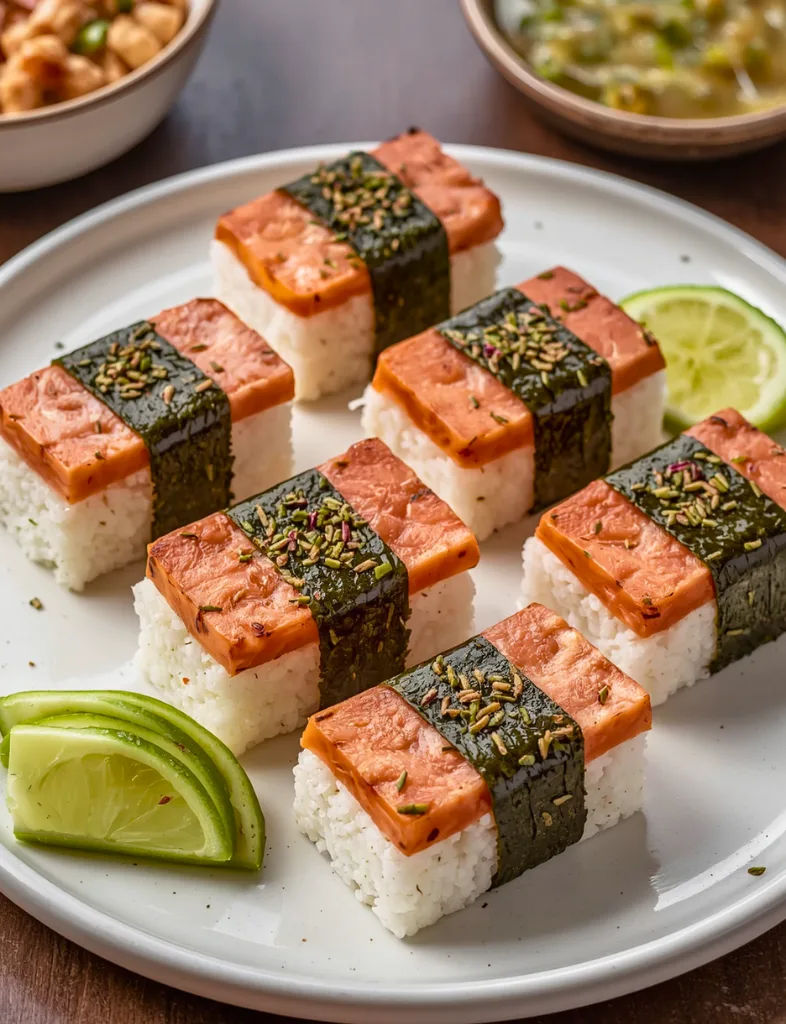
- Pair with a side of pickled ginger (gari) or a drizzle of spicy mayo (mix Sriracha and Kewpie mayo) to cut through the richness .
- Serve as a party appetizer. Cut the Musubi in half diagonally or into four bite-sized pieces for a stunning pupu (appetizer) platter.
- Turn it into a meal. Serve alongside a simple cucumber sunomono salad or a bowl of miso soup.
Storage Tips
Let’s be real: leftover Musubi never tastes quite as good as fresh, but sometimes you have leftovers!
- Refrigeration: Wrap each Musubi tightly in plastic wrap to stop the rice from drying out and the nori from going limp. Store in an airtight container in the fridge for up to 3 to 4 days .
- Reheating: For best results, remove the plastic wrap, wrap the Musubi in a damp paper towel, and microwave for 30-45 seconds. The steam from the paper towel helps soften the rice again without turning the Spam into rubber. You can also pan-fry the assembled Musubi (without plastic) in a little butter to re-crisp the Spam.
- Freezing: I generally do not recommend freezing assembled Musubi. The rice texture becomes grainy, and the nori becomes inedible. If you must freeze, freeze only the glazed Spam and make fresh rice later.
Variations
Musubi culture has exploded with creativity. Once you master the classic, try these twists:
- Spicy Mayo Musubi: Mix 3 tablespoons Kewpie mayo with 1 tablespoon Sriracha and a dash of sesame oil. Spread this on the rice before adding the Spam for a creamy, hot kick .
- Teriyaki Egg Musubi: Whisk an egg and fry it into a thin omelet cut to the size of the Spam slice. Layer the egg between the rice and Spam. This is a popular breakfast version .
- Kimchi Cheese Musubi: Place a slice of sharp cheddar or American cheese on the hot Spam right when it comes out of the pan so it melts. Add a piece of well-drained, chopped kimchi before wrapping .
- Grilled Chicken & Pineapple: For a non-Spam version, marinate chicken thigh in teriyaki sauce and grill it. Add a thin slice of grilled pineapple to the Musubi for a sweet, tropical flavor .
- Vegetarian Tofu Musubi: Fry firm tofu slices in sesame oil until crispy and glaze them with the same soy-sugar mixture. It is just as satisfying as the original .
FAQs
1. Do I have to use a Musubi mold?
Not at all! The easiest hack is to use the empty Spam can.
Wash it out thoroughly, cut off both ends with a can opener, and use the empty cylinder as your mold.
Press the rice in with your fingers (wet them first!) or the back of a spoon .
2. My rice is falling apart. What went wrong?
You likely used the wrong type of rice or didn’t compress it enough.
You need short-grain sushi rice because it has the high starch content necessary for stickiness.
Long-grain jasmine or basmati rice will crumble. Also, make sure you press the rice firmly into the mold.
3. Can I use something else instead of Mirin?
Yes. Mirin adds sweetness and shine.
If you don’t have it, mix 2 tablespoons of rice vinegar with 1 teaspoon of white sugar.
You can also use a dry sherry or white wine with a pinch of sugar as a last resort .
4. Why is my nori chewy?
Nori absorbs moisture from the air and the rice. This is called “soggy nori” syndrome.
To prevent this, do not wrap the Musubi until right before you are ready to eat.
If you are packing it for lunch later, wrap the whole Musubi tightly in plastic wrap.
You can also store the nori strips separately and wrap the block right before eating.
Conclusion
Making Spam Musubi at home is about embracing humble ingredients and treating them with care.
It is proof that you do not need expensive cuts of fish or exotic tools to create something deeply satisfying.
The crispy, caramelized Spam, the sticky rice, and the salty nori create a harmony that hits every craving at once.
So, grab a can of Spam and get your rice cooker going.
Whether you stick to the classic or load it up with spicy mayo, you are about to make a snack that will transport your taste buds straight to the islands.
Classic Hawaiian Spam Musubi
Ingredients
Equipment
Method
- Rinse the sushi rice in cold water until the water runs clear. Cook according to package instructions (usually 20 minutes in a rice cooker).
- Slice the Spam into 6 even slices. In a bowl, mix the soy sauce, brown sugar, and mirin until combined.
- Heat a dry non-stick skillet over medium-high heat. Fry the Spam slices for 2-3 minutes per side until golden brown and crispy.
- Pour the sauce mixture into the pan with the Spam. Let it bubble and reduce for 1-2 minutes until sticky. Flip to coat the Spam fully. Remove from heat.
- Place a Musubi mold (or empty Spam can) on a cutting board. Fill with ½ cup of cooked rice and press down firmly.
- Sprinkle Furikake over the pressed rice.
- Place a slice of the glazed Spam on top of the Furikake. Lift the mold to release the block.
- Lay a strip of nori on a flat surface. Place the rice block on the edge of the nori and roll to wrap the center of the block. Use a grain of rice to seal the edge.
Notes
- Rice is key: Do not substitute long-grain rice; it will not stick together.
- Wet your hands: Always wet your hands with water before handling sushi rice to prevent a sticky disaster.
- No Mirin? Substitute with 2 tbsp rice vinegar + 1 tsp sugar.
- Packing for lunch? Wrap the finished musubi tightly in plastic wrap to keep the nori from getting soggy.
About The Author